Leadership team

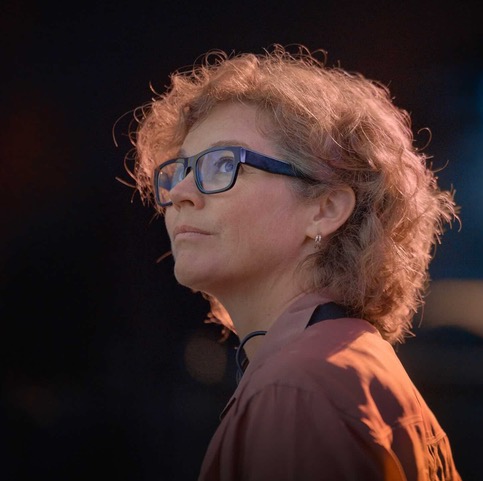
Airi Lampinen is a Professor in Human-Computer Interaction and a co-leader of the Stockholm Technology and Interaction Research (STIR) group. She is also a Docent in Social Psychology at the University of Helsinki. Her research interests include shared and collaborative uses of digital technology, interpersonal and economic encounters, and algorithmic systems. She has published extensively in the areas of Human-Computer Interaction and Computer-Supported Cooperative Work. Currently, in addition to the WASP-HS research group Autonomous Systems and Robotics in Society, Airi leads the research project Shared Uses of Intimate Technology (Swedish Research Council). She is also part of the Digital Futures faculty and represents Stockholm University in the CIVIS alliance’s hub on digital and technological transformation.
Website: airilampinen.fi Email: airi(at)dsv.su.se

Hannah Pelikan is an Assistant Professor at Linköping University and a Pro Futura Scientia Fellow at the Swedish Collegium for Advanced Study in Uppsala. With a PhD in Language and Culture (Linköping University), an engineering degree in Interaction Technology (University of Twente) and a bachelor degree in Cognitive Science (Osnabrück University), she builds interdisciplinary bridges between humanities/social sciences and robotics research. Hannah’s research oscillates between ethnomethodological studies of how people interact with robots in the wild and interaction design grounded in video-recorded robot interactions. In her current research, Hannah is studying how people support robots in public settings, including delivery robots on the streets of Stockholm.
Website: https://hannahpelikan.com/ Email: hannah.pelikan(at)liu.se

Madeline Balaam is a Professor in Interaction Design at KTH Royal Institute of Technology. Her research is concerned with Interaction Design for health and wellbeing. Driven by a desire to design technologies which better meet the needs and practices of people in their everyday lives, she applies participatory and user-centred design methods. For the last decade, her research has focussed on the design, development and study of intimate technologies. Within the field of HCI intimate technologies typically concerns technologies that relate to an intimate body part, intimate body process, or intimate relationships.
Website: https://www.kth.se/profile/balaam Email: balaam(at)kth.se

Katie Winkle is an Assistant Professor at the Department for Information Technology at Uppsala University. She previously held a Digital Futures postdoctoral fellowship at KTH Royal Institute of Technology and completed her PhD in Robotics and Autonomous Systems at the Bristol Robotics Laboratory. Her research sits at the intersection of robotics, design, and the social sciences to tackle technical and societal challenges relating to human-machine interaction. From empirically grounded research to speculative design, her work examines how robots and autonomous systems reflect and influence structures of power. In particular, she is concerned about the ways such systems risk reifying existing social inequalities, and works to unlock more equitable, meaningful, and socially responsible futures through the design of human-machine interactions. Her award-winning work on feminist human-robot interaction has gained significant attention within the field and is helping to define new, critical directions of research on the design of robots and their interaction behaviours.
Website: https://kwinkle.github.io Email: katie.winkle(at)it.uu.se
Participating Researchers
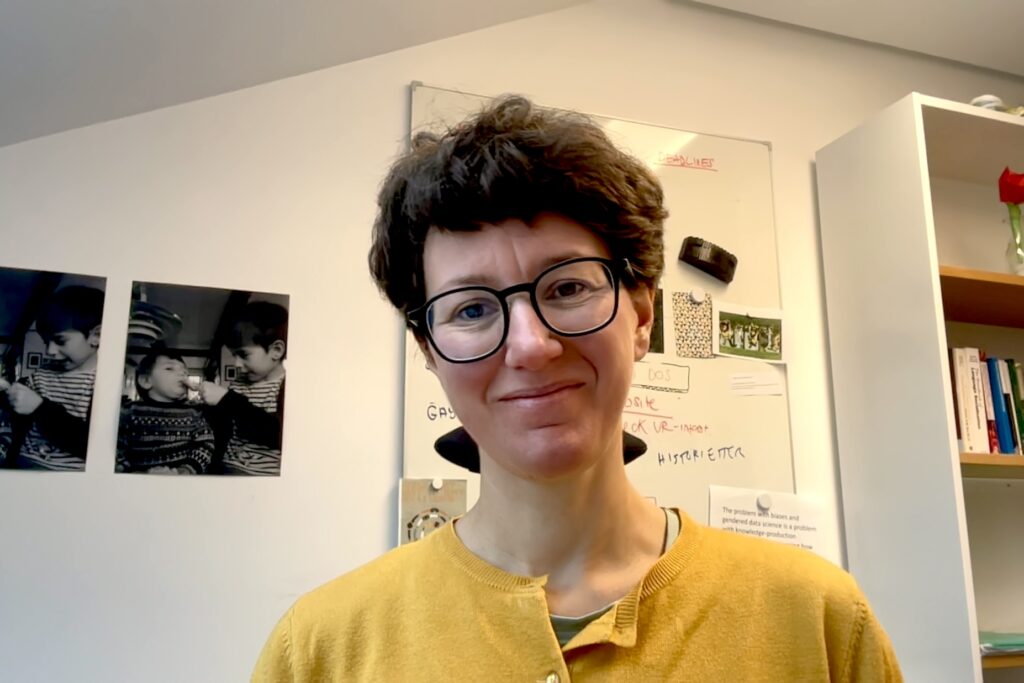
Valentina Fantasia is a Developmental Psychologist and Associate Professor in Cognitive Science, with a keen interest on human social interactions. Her research investigates how young children understand, share and make sense of the world in ecological interactions with others.
She is also interested in technology-related ethics, trying to unfold how interactional, bodily and affective boundaries between humans and technological artefacts are re-negotiated and shaped in different contexts and with different actors involved. Along this line, she often uses critical and feminist perspectives to understand how humans interact with and make sense of artificial social agents/devices in their daily ecologies.
Valentina leads the SITE research group at the Department of Philosophy, Lund University, and is the PI of several projects within social robotics and the interplay between technology and children development.
Website: https://www.fil.lu.se/en/person/ValentinaFantasia/ Email: valentina.fantasia(at)lucs.lu.se

Iolanda Leite is an Associate Professor at KTH Royal Institute of Technology, where she leads research on developing robots that can perceive, learn from, and respond appropriately to people in real-world situations. She holds a PhD in Information Systems and Computer Engineering from IST, University of Lisbon. Before joining KTH, she had postdoctoral appointments at Yale University and Disney Research. Her work has been recognized with best paper awards at top-tier conferences like HRI and ICMI, and best paper nominations at ICRA. She currently serves as co-editor-in-chief of the ACM Transactions on Human-Robot Interaction (THRI) journal.
Website: https://www.kth.se/profile/iolanda Email: iolanda(at)kth.se
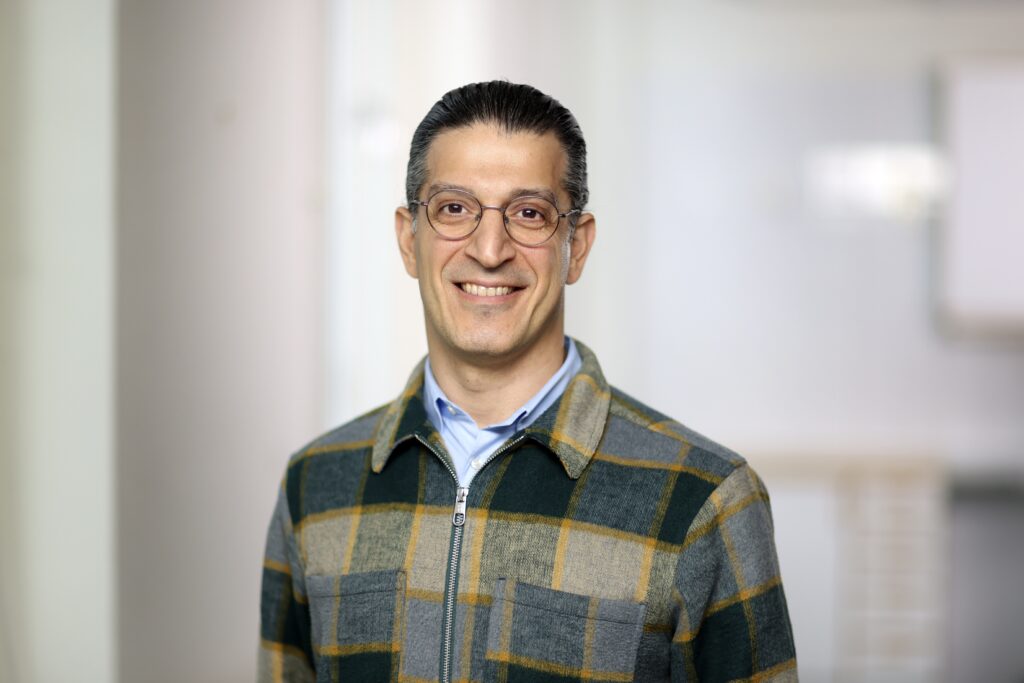
Ali Reza Majlesi is an Associate Professor of Education and a Senior Lecturer in Speech and Language Pathology at Karolinska Institutet. His research focuses on social interaction, with particular attention to sense-making processes, embodied practices, and engagement with material objects, including machines, in both face-to-face and mediated encounters across diverse everyday and institutional contexts. His work spans the intersecting domains of communication, health, technology, and professional practice. He studies interaction involving individuals with varied communicative and cognitive abilities, including multilingual interaction, human–robot interaction, and communication with people experiencing speech and language disorders or reduced capacities for talk-in-interaction.
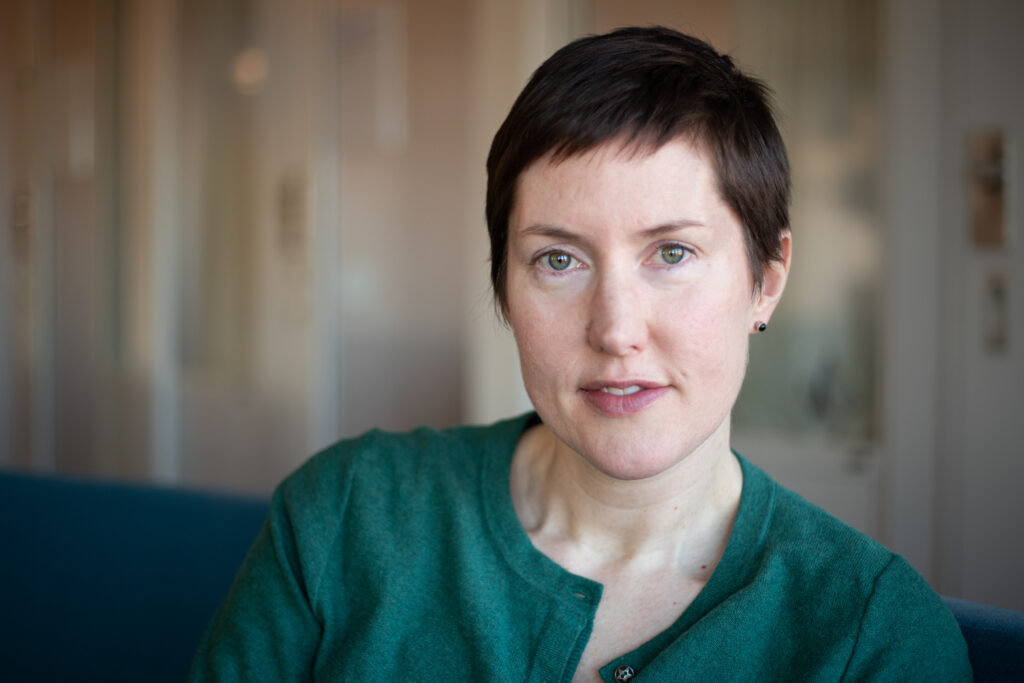
Katherine Harrison is Associate Professor in Gender Studies at Linköping University. Her research sits at the intersection of Science & Technology Studies, media studies, and feminist theory, bringing critical perspectives on knowledge production to studies of different digital technologies. She has received funding from the Swedish Civil Contingencies Agency, the Danish Council for Independent Research, Marcus and Amalia Wallenberg Foundation, Riksbankens Jubileumsfond, Marianne and Marcus Wallenberg Foundation and the Swedish Research Council for Sustainable Development (FORMAS). She is currently co-PI for two WASP-HS (Wallenberg AI, Autonomous Systems and Software Program – Humanity and
Society) projects titled: The ethics and social consequences of AI and caring robots. Learning trust, empathy and accountability, and Operationalising ethics for AI: translation, implementation and accountability challenges.
Website: https://liu.se/en/employee/katha38 Email: katherine.harrison(at)liu.se

Ylva Fernaeus is Professor in Design at Umeå University and also works as a lecturer at KTH Royal Institute of Technology. Her work concerns the design of interactions as they take place with physical things, blending critical theory with creative practice, at the intersections of technology, culture, and design. Ylva has 20 years experience of working with robot interactions from a design perspective through various projects concerned with robotic shapes and movements, in the contexts of art, play, and everyday control. As co-director of UmArts, she leads projects on Art and AI and Postindustrial Making, investigating how tech-driven design practices shape contemporary knowledge-making. Websites: https://www.kth.se/profile/fernaeus
https://www.umu.se/personal/ylva-fernaeus/

Sara Ljungblad is an Associate Professor (Docent) in Interaction Design at Gothenburg University and Chalmers University of Technology in Gothenburg. She is now orienting herself toward children’s rights and playful ways to deal with important societal questions and technological solutions. Currently, she studies the ongoing use of school robots to understand why some children are absent, how these robots affect that situation, and alternative perspectives. She has been working with Critical Robotics, an initiative oriented towards criticality in robotics field for more than 20 years. Which positionality, who are stakeholders, who is marginalized and what are alternative perspectives? What is criticality in the robotics field? How about problematization? Could a robot research suggest other solutions than a robot? Sara has been funded by Riksbankens Jubileumsfond, WASP-HS (Wallenberg Foundation), Post och Telestyrelsen, Grundskoleförvaltningen, Chalmers and more. She has spent three years working as an in-house researcher, working closely with industrial designers and interaction designers at LOTS Design (2011-2014). She has worked at the Mobile Life Centre, at SICS in Stockholm (2007-2011), and been a guest researcher at Microsoft Research in Cambridge (2008). She is a supplement member of the ethics board in Sweden (2025-). Email: sara.ljungblad@chalmers.se
Website: https://www.chalmers.se/en/persons/ljungbls/

Rachael Garrett is a Research Associate studying the intersection of design, ethics, and autonomous technologies. She focuses on the felt and embodied practice of ethics within physical or proximate interactions with autonomous technologies such as machines, robots and aerial drones. Her work combines critical feminist perspectives and qualitative research methods to construct new ways of understanding our relationships with intelligent technologies and how we can reimagine the ways that humans and technologies share our world. She currently works on the World Leading Turing AI Fellowship: Somabotics: Creatively Embodying AI at the University of Nottingham and is a guest at KTH Royal Institute of Technology.
Website: https://rachaelgarrett.com/ Email: rachaelg(at)kth.se
International Guest Researchers
Stuart Reeves is an Associate Professor in the School of Computer Science, University of Nottingham, UK. He develops hybrid approaches that blend Human-Computer Interaction (HCI) research with studies grounded in ethnomethodology and conversation analysis to understand how digital technologies and infrastructures become praxeologically enmeshed within the organisation of everyday life. This research approach engages with critical technology design practices, and with conceptual implications for designers and developers of interactive systems. Recently Stuart’s work has been preoccupied with examining ‘real world’ applications of Human-Robot Interaction (HRI) and Human-Robot Collaboration (e.g., Pelikan et al. 2024, Reeves et al. 2025, Reyes-Cruz et al. 2026), and what this means for robot designers via design frameworks (Pelikan et al. 2025). Stuart leads the Social Interaction and Technology (SIT) special interest group at Nottingham.

Sylvaine Tuncer is a Lecturer In Work, Interaction & Technology at King’s College London. She is a sociologist and qualitative researcher who draws on ethnography and video analysis (informed by ethnomethodology and conversation analysis) to study work practices and interactions, with a special interest in technology and sociomateriality. She explores the nitty-gritty ways in which practitioners enact resources and work around constraints to get their work done, and how in turn these entanglements between material and human agencies enact organisations and social relationships. Her current projects include hybrid auction sales of fine art and antiques and robotic surgery.
Stay tuned for more
Advisors